This article examines how humanitarian organizations are sharing data responsibly, maximizing its value for good while safeguarding against misuse. It outlines a practical governance framework to ensure data is managed ethically and effectively. The insights reflect practices from global leaders like the World Food Programme (WFP), Food and Agriculture Organization (FAO), Humanitarian Data Exchange (HDX), GiveDirectly, and the Global Development Incubator (GDI) and its ventures, positioning responsible data governance as a critical skill set for humanitarian professionals and policy-makers alike.
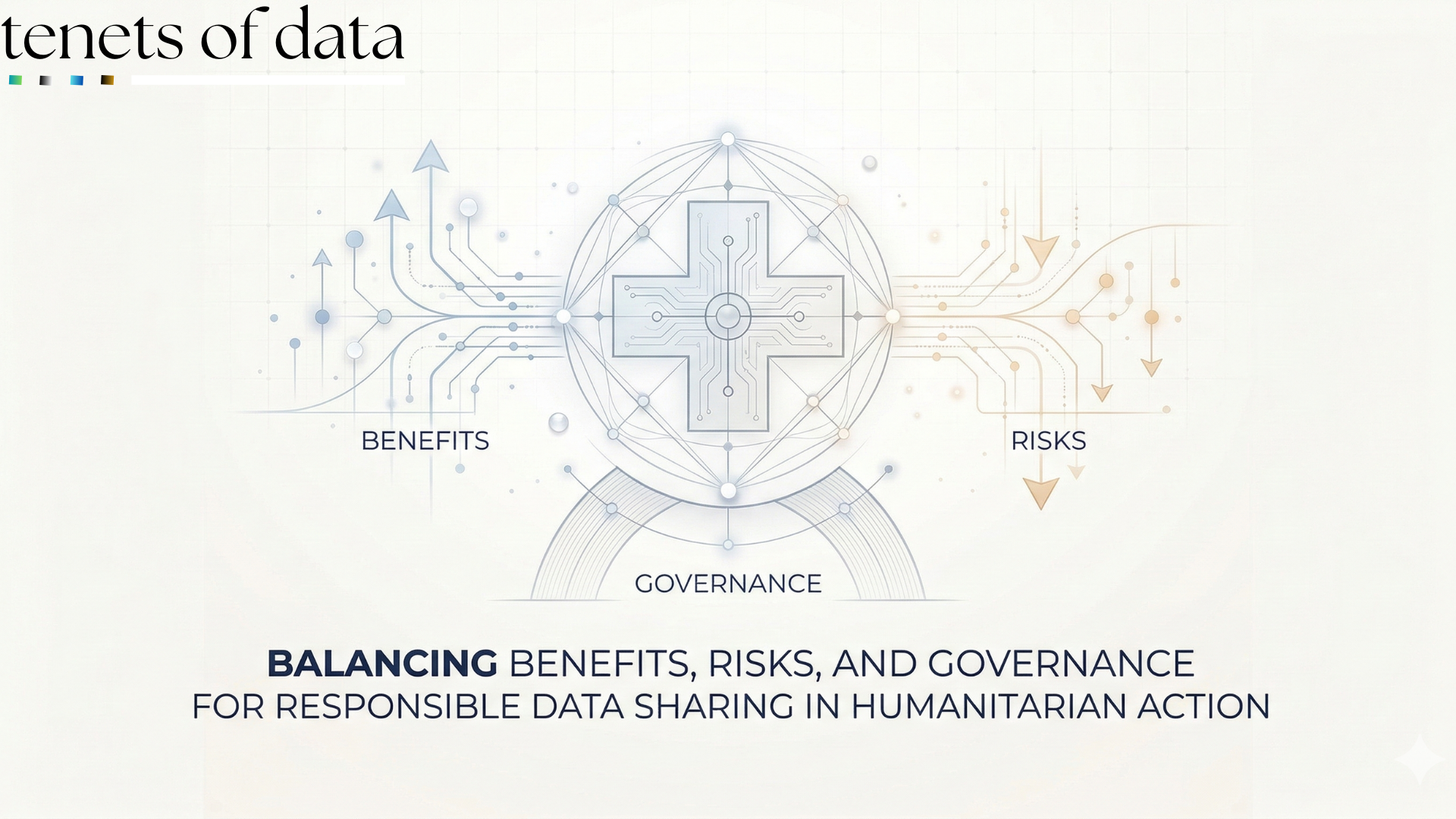
Balancing Benefits, Risks, and Governance for Responsible Data Sharing in Humanitarian Action
Introduction
In humanitarian work, data has become as critical as food, water, or shelter. Whether it’s tracking the spread of cholera, mapping food insecurity, or coordinating cash transfers, decisions rise and fall on the quality and availability of information. Yet data in this sector is not neutral: it carries the identities, vulnerabilities, and sometimes even the survival prospects of those we aim to serve.
That tension, between the power of data to save lives and the risks of exposing the people behind the numbers, is at the heart of today’s humanitarian operations. Organizations such as the World Food Programme (WFP), FEWSNET, FAO, GiveDirectly, the Humanitarian Data Exchange (HDX), and newer innovators like the Global Development Incubator (GDI) are all grappling with the same challenge: how to share data in ways that enhance coordination and accountability without undermining trust or compromising safety.
As someone working at the intersection of data analysis and governance, I see this not as a technical detail but as a defining issue for the sector. The question is no longer whether to share data, but how to share it responsibly.
In humanitarian crises, data can be as life-saving as food or medicine. From refugee registries to satellite imagery of crop yields, sharing information helps aid organizations coordinate relief, increase transparency, and drive innovation. Yet alongside these benefits come serious risks: mishandled personal data can put vulnerable individuals in harm’s way, violate their privacy, or spark a political backlash.
This article examines how humanitarian organizations are sharing data responsibly, maximizing its value for good while safeguarding against misuse. It outlines a practical governance framework to ensure data is managed ethically and effectively. The insights reflect practices from global leaders like the World Food Programme (WFP), Food and Agriculture Organization (FAO), Humanitarian Data Exchange (HDX), GiveDirectly, and the Global Development Incubator (GDI) and its ventures, positioning responsible data governance as a critical skill set for humanitarian professionals and policy-makers alike.
The Promise of Data Sharing in Humanitarian Work
Effective data sharing can dramatically improve humanitarian outcomes by breaking down silos and enabling collective intelligence. Key benefits include:
Improved Coordination and Efficiency
When agencies pool their information, they can identify needs and gaps more quickly, avoid duplication, and deliver aid more efficiently. For example, WFP and UNHCR’s interoperable data systems in refugee camps allow bi-directional, real-time exchange of beneficiary data, eliminating tedious manual processes. The result has been “enhanced coordination…[with] efficiencies in data management” and faster assistance for refugees, unhcr.org. Sharing data through a common platform ensured that each family’s food rations were based on the most up-to-date household composition, thereby reducing errors and waste.
Transparency and Accountability
Open data fosters trust among stakeholders. Humanitarian donors and affected communities alike can see where resources are going. Platforms such as OCHA’s Humanitarian Data Exchange (HDX) have made nearly 10,000 datasets publicly available across 250+ locations, improving collective analysis and public transparency. Crucially, HDX balances openness with safeguards: datasets containing personal or sensitive information are not fully public but instead “only made available by request for approved users”, illustrating how transparency can coexist with privacy protection.
Innovation and Insight
Data sharing fuels innovation by enabling the development of new analytical tools and fostering collaborations. Organizations like GiveDirectly and IDinsight leverage shared data and cutting-edge analytics to target aid more effectively. In Togo, for instance, GiveDirectly partnered with researchers to utilize phone metadata and satellite data to identify vulnerable households for cash transfers, a novel approach that dramatically accelerated aid delivery. Such initiatives demonstrate how combining data from telecom companies, governments, and NGOs can lead to breakthroughs in reaching people in need. Indeed, “open sharing of timely and accurate data is essential to humanitarian response”, as noted by the OCHA Centre for Humanitarian Data, humdata.org, because it enables evidence-based decision-making and scalable solutions that save lives.
Risks and Challenges: Privacy, Consent, and Context
While the upsides are significant, humanitarian data sharing also poses serious risks and ethical challenges that must be managed with care:
Privacy Breaches
Humanitarian datasets often contain personal details, such as names, locations, and family ties, about people who may already be at risk. If such sensitive data is leaked or accessed by malicious actors, it can further harm or exploit people. For example, exposing the identities or coordinates of aid recipients in a conflict zone could make them vulnerable to attack. Even aggregated “non-personal” data can be sensitive, e.g., maps of ethnic communities or shelter locations, in the wrong hands. Maintaining confidentiality and strong cybersecurity is literally a matter of safety in these contexts.
Lack of Consent and Community Trust
In crises, data is often collected under pressing conditions, and individuals may not fully understand or agree to how their information will be used. This raises ethical concerns about informed consent and dignity. Leading organizations emphasize the importance of communication and consent as foundational. GiveDirectly’s work with mobile data provides a telling example: when they consulted communities in Kenya and Malawi about using phone records to determine aid eligibility, they found that “almost all interviewees trusted GiveDirectly” with their data due to the organization’s track record, “but many were concerned about the risk of this data being shared with community members who might cause them harm,” givedirectly.org. This feedback highlights the need to obtain consent, explain data uses in local languages, and address fears proactively. Without community trust, even well-intended data projects can falter.
Data Misuse and Security:
Sharing data broadly can lead to unintended misuse if proper controls aren’t in place. For instance, if beneficiary data shared with a partner agency is later used for unrelated purposes, such as marketing, surveillance, or political targeting, it violates the humanitarian principle of “do no harm.” A notable controversy arose when WFP partnered with a private tech firm for data analytics, sparking debate about whether external actors might access vulnerable people’s data without adequate safeguards, centre.humdata.org. Similarly, sharing data with host governments can be sensitive. While it may improve coordination, there’s a risk that authorities could use data on refugees or minorities in ways that breach human rights. Ensuring data is used only for its intended humanitarian purpose and secured against breaches is a constant challenge.
Political Sensitivities:
Humanitarian data often has political implications. Statistics on hunger, displacement, or casualties can embarrass governments or attract media scrutiny. In some cases, agencies face pressure to restrict the release of data or sanitize findings. Data sharing agreements must navigate these sensitivities, allowing critical information to flow for aid purposes while respecting laws and local contexts. For example, FAO and WFP must consider governments’ concerns when publishing food security assessments, and often use anonymized, aggregated data to avoid inflaming tensions. Balancing transparency with diplomacy requires careful judgment and discretion.
These challenges underscore the emergence of a culture of data responsibility in the humanitarian sector. As one policy puts it, data responsibility is the “safe, ethical and effective management” of data to avoid harm while maximizing benefit, centre.humdata.org. How can organizations achieve this in practice? The answer lies in robust governance.
A Framework for Responsible Data Governance
To share data responsibly, humanitarian organizations are developing comprehensive governance frameworks. Below is a practical, policy-driven framework covering the key pillars of responsible data sharing in humanitarian action:
Informed Consent & Community Engagement
Always obtain informed consent from individuals before collecting or sharing their data, unless doing so would compromise the urgency of life-saving measures. Wherever feasible, explain to people why their data is being collected and how it will be used, in a language and manner they understand. Community engagement builds trust and respects human dignity. For instance, GiveDirectly integrates community consultations into its data projects, explaining advanced techniques, like AI-driven targeting, in simple terms and gauging comfort levels, givedirectly.org. Humanitarian teams should use culturally sensitive and appropriate consent forms, allowing individuals to opt out if possible. When consent cannot be obtained individually, e.g., during mass registrations in a refugee influx, organizations should apply the “do no harm” principle, be transparent after the fact, and strictly limit data use to its intended humanitarian purpose.
Data Minimization & Purpose Limitation
Collect and share only the data necessary for the task, and use it strictly for the defined humanitarian purposes. Limiting data minimizes the risk of misuse. In practice, this means designing surveys and data requests to minimize the inclusion of extraneous personal details. WFP and UNHCR’s data-sharing in Tanzania is a model: “We don’t share more data than absolutely necessary; [we] minimize, as much as possible, the risks that come with regular data sharing,” unhcr.org. Personal data, such as names or biometrics, should be shared only when required to deliver aid; otherwise, use coded IDs or aggregated figures. Clearly specify the purpose, e.g., providing food aid, monitoring a program, in data sharing agreements, and do not repurpose the data later without new consent. Purpose limitation builds trust that data won’t “creep” into unintended uses.
Secure Access Controls & Anonymization
Protect data through strict access controls and anonymization where appropriate. Not everyone needs access to raw personally identifiable information; in fact, most analysis can be done on anonymized or aggregated data. Humanitarian agencies are implementing role-based access controls, encryption, and audit trails to ensure that only authorized personnel or partners have access to sensitive data. The HDX platform embodies this principle: while it promotes open data, any dataset containing personal or identifying information is placed under restricted access, available “by request for approved users” rather than openly on the web or at datacollaboratives.org. This layered approach, public versus permissioned data, allows broad information sharing for transparency and research, while safeguarding individual privacy. Regular security audits and mandatory staff training on data protection are also essential to maintain confidentiality and integrity.
Data Sharing Agreements & Legal Compliance
Formalize data sharing through clear agreements and policies that enforce privacy standards. Whenever organizations exchange data, whether between two humanitarian agencies or with a government or a private partner, they should sign Data Sharing Agreements (DSAs or MoUs) detailing what data will be shared, for what purpose, who will access it, how it will be protected, and how long it will be retained. These agreements should align with international data protection principles, such as the UN’s Personal Data Protection and Privacy Principles, as well as any applicable laws. A leading example is the 2018 addendum to the WFP–UNHCR global agreement, which focused on data sharing and ensured “all the data exchanges are based on international and United Nations data protection and privacy standards,” unhcr.org. By codifying expectations, agreements create accountability.
Oversight, Accountability & Continuous Improvement
Establish governance bodies and processes to oversee data activities. This may include appointing a Data Protection Officer or establishing a data governance committee to oversee compliance with policies. Regular audits, risk assessments, and incident response plans are vital. In large-scale operations, humanitarian clusters have begun developing Information Sharing Protocols (ISPs) as a standard practice. These protocols set common rules for all NGOs and UN agencies in the response, overseen by coordination bodies, centre.humdata.org. Crucially, a culture of responsible data use should be nurtured through training and leadership examples. When mistakes or data breaches occur, organizations must be transparent about what happened and remediate quickly; this accountability actually strengthens trust over time.
From Policy to Practice: Roles in Operationalizing Data Governance
Translating lofty policies into day-to-day practice requires dedicated roles and skills. Data analysts, data scientists, and IT specialists on the ground have a responsibility to implement these principles, such as anonymizing datasets before sharing, running disclosure risk checks on outputs, and ensuring systems are secure by design. They turn the governance framework into concrete action. On the other hand, data governance and protection specialists, increasingly found in organizations such as the WFP, FAO, and large NGOs, develop policies, conduct training, and provide oversight.
Collaboration between technical data staff and policy staff is key. A governance framework only matters if front-line staff understand and embrace it. That’s why leading organizations emphasize capacity building: WFP’s teams, for example, are trained on its data privacy guidelines, and GiveDirectly reports 98% staff completion of risk and ethics training in 2024. The message is that everyone handling data is a steward of it and must uphold the organization’s values when using it. By operationalizing responsible data practices, humanitarian professionals not only protect individuals and communities but also enhance the sector’s credibility and reputation.
Conclusion: Championing Responsible Data for Humanitarian Impact
As the humanitarian sector becomes increasingly data-driven, responsible data governance is not a box-ticking exercise; it is fundamental to principled and effective action. Sharing data responsibly enables life-saving coordination, transparency, and innovation while guarding against harm to the very people we aim to help.
Organizations from UN giants like WFP and FAO to agile innovators like GiveDirectly and IDinsight are converging on the same truth: without robust policies on consent, privacy, and accountability, the promise of data can too easily turn into peril. Conversely, when data is governed well, it becomes a powerful enabler that amplifies impact and upholds human dignity.
Humanitarian leaders and policymakers globally should continue to invest in data governance frameworks and skilled professionals to implement them effectively. Ultimately, responsible data sharing is about respect, respecting the rights of individuals, the mandates of organizations, and the collective goal of alleviating suffering. The challenge now is to scale these practices across all operations and organizations. If we succeed, we will not only improve humanitarian outcomes but also set a global example for ethical data use.
Looking Ahead: AI, Innovation, and My Perspective
The next frontier for humanitarian data governance will not only be about sharing, but also about how emerging technologies use what is shared. Machine learning models are already being trained on humanitarian datasets. This offers enormous promise: predictive analytics can help forecast famines, optimize cash transfers, or pre-position supplies ahead of disasters. But it also raises critical questions: who owns the training data, what safeguards protect against bias or re-identification, and how do we ensure that algorithmic decisions remain accountable to the communities they affect?
This is where the discipline of data governance becomes transformative. Humanitarian organizations can lead by adopting practices such as federated learning, in which models are trained across multiple agencies’ data without moving the data itself, or differential privacy, which enables insights without exposing individuals. These are not futuristic luxuries; they are tools we can deploy now to make data sharing both useful and safe.
Conclusion
As someone working at the intersection of data analysis and governance, I see a dual mission: to strengthen the integrity of humanitarian data pipelines today and to prepare organizations for the ethical use of tomorrow’s technologies. I believe that robust frameworks, clear consent, and strong accountability mechanisms are not obstacles but enablers, the foundation that will allow innovation and trust to move hand in hand.
If your organization is grappling with these questions, I’d welcome the chance to exchange ideas. The humanitarian sector cannot afford to treat data governance as an afterthought; it must become a core capability. Done right, data sharing can be not just an operational practice, but a pathway to more effective, equitable, and resilient humanitarian action.