Introduction
Imagine a source team renames a column from user_id to customer_id on a Tuesday morning. By Tuesday afternoon, five executive dashboards are blank, two machine learning models have crashed, and the data engineering team is spending their entire day tracing a problem that could have been prevented by a single rule: treat your data like a product. This is the data junkpile reality many organizations face, where disconnected tables and undocumented pipelines lead to permanent firefighting.
Moving from Raw Data to a Data Product
In a modern data mesh, data is no longer just a byproduct of an application; it is a first-class citizen. A true data product is a reusable, active, and standardized asset designed to deliver measurable value. However, a table sitting in a warehouse isn't a product any more than a pile of loose parts is a race car. What turns raw data into a product is the product wrapper: the metadata, governance, and quality guarantees that make the asset usable by someone who didn't build it.
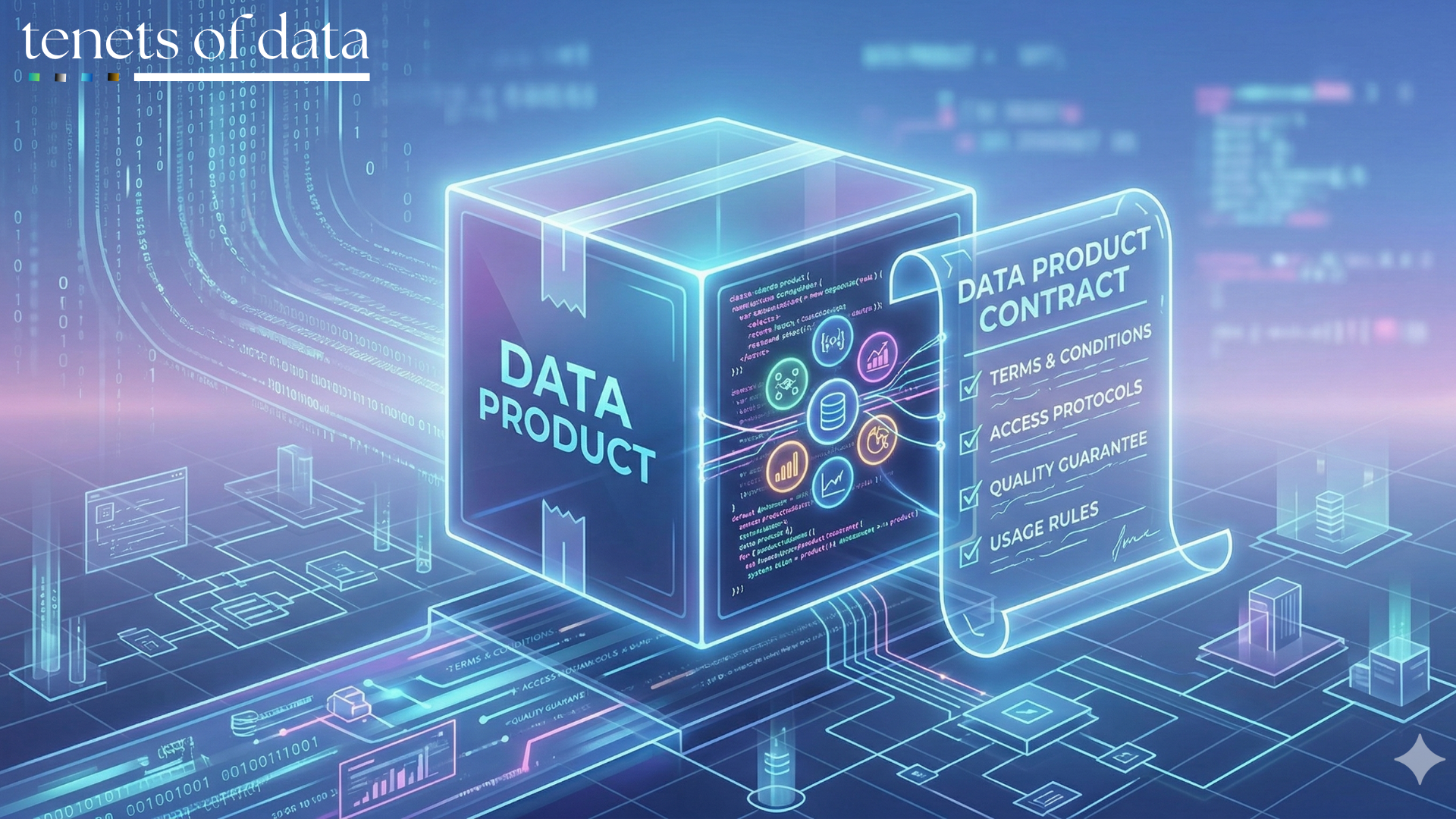
A useful mental model here is the Smart Parcel. The data itself is the item inside the box– inert and opaque. The data contract is the shipping label, the tracking number, the customs declaration, and the digital lock. The label tells you where it came from, the tracking number tells you its current state, and the lock ensures only authorized recipients can open it. Moving data without a contract is like shipping unlabelled boxes in the dark and acting surprised when the delivery fails.
The core of the Agreement– What’s Inside?
A data contract is a formal, machine-readable agreement expressed in code or configuration that defines the structure, meaning, and delivery expectations for data exchange. It functions like an API for data, ensuring that both producers and consumers speak the same language.
1. The Schema (The Blueprint)
At its most basic level, the contract defines the explicit field names, data types, and structures. This blueprint acts as a hard constraint; if a producer tries to push a change that violates this schema, the system can block it before it reaches production.
2. Semantics and Business Logic (The Meaning)
Raw fields are meaningless without context. A column named revenue might mean gross revenue to Sales but net revenue to Finance. The contract embeds semantic logic, providing plain-English definitions so everyone operates with a shared understanding. It also captures transition rules, such as ensuring a "fulfillment date" never precedes an order date.
3. Service Level Agreements (The Promise)
A contract defines operational commitments such as freshness and availability. It might guarantee that data is updated every five minutes or that it maintains 99.9% uptime. This allows consumer teams to build real-time applications with confidence, knowing they will be alerted the moment a breach occurs.
Governance as Code
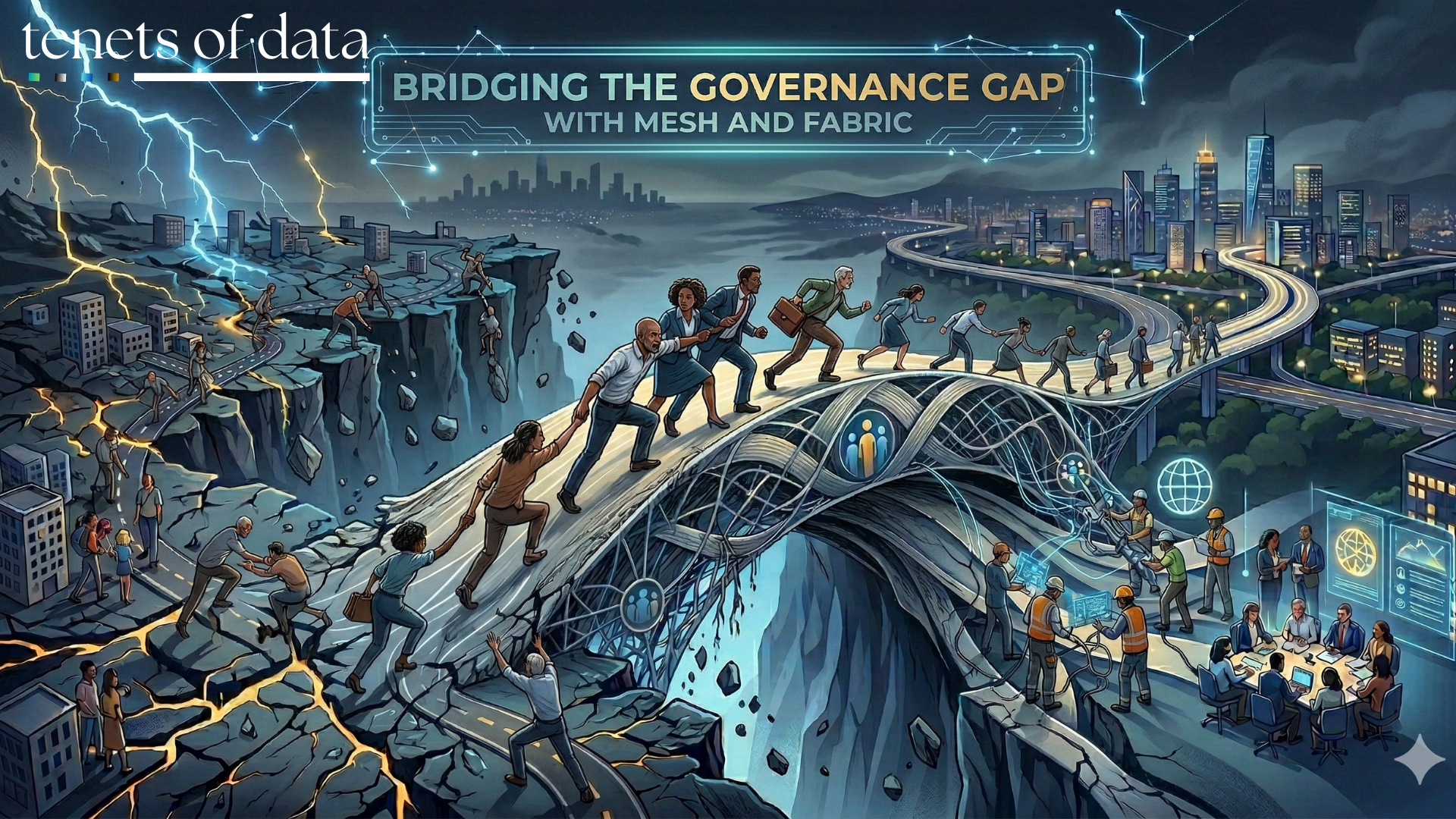
The most significant shift with data contracts is moving governance from static, ignored documentation to executable guards. Instead of a data monarchy, in which a central team slows down every request, data contracts enable federated governance.
In this model, responsibility is shifted left to the producers who know the data best. They define the contract in version-controlled files like YAML or JSON. This contract is then integrated directly into the CI/CD pipeline. When a developer makes a change, pre-merge hooks run automated validations– checking for schema conformity or null thresholds– and block bad data from ever reaching the main branch. This is the adult in the room that prevents the cascading disruptions common in interconnected data ecosystems.
The Relatable Reality: Collaborative, Not Chaotic
While it sounds technical, the goal of a data contract is deeply human: it sets the rules of the game, so teams can work independently without fear. Organizations like Kroger and General Motors use these frameworks to create a common language, ensuring that meaning, quality, and lineage travel with every dataset– from the factory floor to the AI models.
Conclusion
By left-shifting ownership, you eliminate the ambiguity that leads to data downtime, those moments when your data is missing, stale, or erroneous. Ultimately, a data contract is what allows a company to stop treating data as a ticket to be resolved and start treating it as a product to be managed, transforming data from an invisible cost into a strategic asset.